Cowboy Skeleton Embroidery Design Review
As an experienced embroidery designer who has spent countless weekends setting up booths at craft fairs across North America, I know that the difference between a sold-out table and a quiet afternoon often comes down to one thing: the visual punch of your machine embroidery design. Today, I am putting the Cowboy Skeleton Embroidery Design under the microscope. This isn't just about whether the stitches lay flat; it is about whether this specific motif will make a customer stop walking, pick up a tote bag, and pull out their wallet. When you are selling handmade products in a crowded market, your design needs to speak louder than the noise around it.
First Impressions: Bold, Fun, and Seasonally Versatile
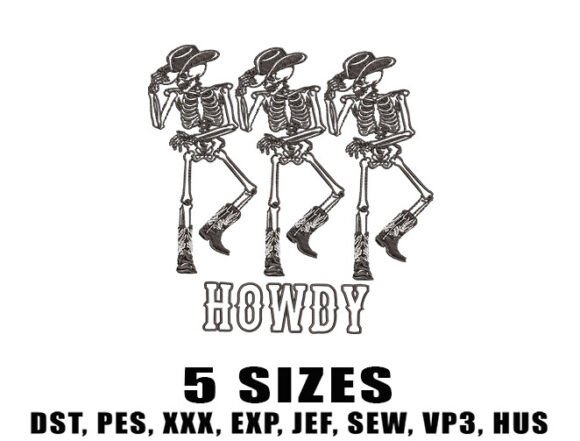
The moment I opened the digital file for the Cowboy Skeleton Embroidery Design, the vibe was immediately clear. It is bold, playful, and undeniably fun. The concept of a skeleton tipping its hat with the word "Howdy" strikes a perfect balance between spooky and friendly. In the world of craft fair products, designs that walk the line between edgy and approachable tend to perform exceptionally well. This is not a delicate, lacy floral piece meant for a bridal shower; it is a statement piece. It feels rustic yet modern, fitting seamlessly into Western, rodeo, and Halloween-themed collections. For an Etsy seller or boutique maker looking to refresh their inventory for the fall season, this design offers immediate thematic relevance without feeling too dark or scary for general audiences.
Product Potential: Where Does This Design Shine?
When planning my booth display, I visualize how a design translates from a screen to a physical object. The Cowboy Skeleton Embroidery Design is incredibly versatile, but some applications will yield better results than others. Let's break down where this motif works best as a craft fair product.
- Tote Bags: A canvas tote bag is the ideal canvas for this design. The sturdy fabric supports the stitch density well, and the large surface area allows the cowboy skeleton to be the focal point. A black or denim blue tote with white and orange thread would create a striking contrast that catches the eye from across the aisle.
- Apron Embroidery: Kitchen aprons are perennial bestsellers. Placing this design on the bib of a heavy-duty cotton apron gives it a personality that buyers love. It suggests a fun, spirited cook who doesn't take themselves too seriously. This is a strong contender for a high-value handmade product.
- Tea Towel Embroidery: While tea towels are popular, the textured weave can sometimes challenge intricate details. However, because the Cowboy Skeleton Embroidery Design relies on bold shapes rather than fine lines, it should hold up reasonably well on a terry cloth towel, provided the stabilizer is chosen correctly.
- Embroidered Patches: Creating patches from this design is a smart move for small shop owners. Patches have a lower material cost and allow customers to customize their own denim jackets or bags. The "tipping hat" pose is distinct enough to remain recognizable even when cut out as a patch.
- Caps and Pillows: Curved surfaces like caps require careful attention to stitch direction. The "Howdy" text might warp slightly if the cap is too small, so testing is crucial. Pillow covers, however, offer a flat, plush surface that makes the design pop beautifully.
Production Reality: Stitch Density and Fabric Texture
As a professional, I must address the practicalities of production. Before committing to a batch run, I always test the embroidery file on scrap fabric. One of the first things to check is the stitch density. Designs featuring skeletons often have areas of open space (the bones) and solid areas (the hat, the bandana). If the density is too high, the design may pucker, especially on thinner fabrics like quilting cotton used for pillow covers. Conversely, if it is too sparse, the background fabric might show through in unwanted ways.
Fabric texture plays a massive role here. On a smooth linen tote bag, every stitch will be crisp. On a thick, looped kitchen towel, the loops can interfere with the tiny details of the skeleton's face or the lettering of "Howdy." If you plan to use textured materials, ensure your hoop size is appropriate to keep the fabric taut, and do not skimp on the stabilizer. A tear-away or cut-away stabilizer matching the weight of your fabric is non-negotiable for a clean finish.
Furthermore, consider the thread colors. To make this design stand out in a booth, high contrast is key. White thread on dark fabric, or bright orange and yellow against black, creates a visual vibration that draws attention. Avoid using thread colors that blend too closely with the background unless you are aiming for a subtle, tonal look, which is less effective for impulse buys at a market.
Selling Strategy: From Booth Display to Online Listings
The success of the Cowboy Skeleton Embroidery Design also depends on how you present it. At a craft fair, customers need to understand the design at a glance. This motif is excellent for that purpose; the silhouette of a cowboy skeleton is instantly recognizable. When arranging your table, group items by color or theme. A stack of black tote bags with this white embroidery will create a powerful visual block that stops traffic.
For the online component, such as your Etsy shop, photography is everything. You need a printable mockup or, better yet, a real photo of the finished product. Show the design on different backgrounds. Highlight the quality of the stitching close-up to prove the value of your commercial embroidery work. Buyers want to see that the letters in "Howdy" are legible and that the skeleton's features are sharp. Clear photos build trust and justify a higher price point for your small shop product.
Practical Designer Notes for Success
If you decide to use the Cowboy Skeleton Embroidery Design for your business, follow these steps to ensure quality:
- Test First: Always embroider a sample on the exact fabric you intend to sell. Check for puckering and thread breaks.
- Check Licensing: Confirm that your license allows for commercial use of the finished products. As a digital seller, you must respect the intellectual property rights of the original creator.
- Size Appropriately: Do not shrink the design too much. Tiny details on the skeleton or the text may become muddy if scaled down below a certain threshold.
- Stabilize Properly: Use the right stabilizer for the fabric weight. This is the secret to professional-looking finished product quality.
- Review Spacing: Ensure there is enough room between the design and the edge of your item to prevent fraying or cutting off part of the image.
Final Verdict: A Winner for the Season
In conclusion, the Cowboy Skeleton Embroidery Design is a robust asset for any creative entrepreneur targeting the Western, Halloween, or general novelty markets. Its bold nature ensures it stands out in a sea of generic floral patterns. Whether you are producing a limited run of embroidered patches or stocking up on aprons for the holiday rush, this design offers strong visual appeal and broad customer engagement. By paying attention to fabric choice, stabilizer use, and presentation, you can turn this digital embroidery file into a profitable staple for your handmade business. Just remember to verify the specific technical details of your file before hitting the start button on your machine.